

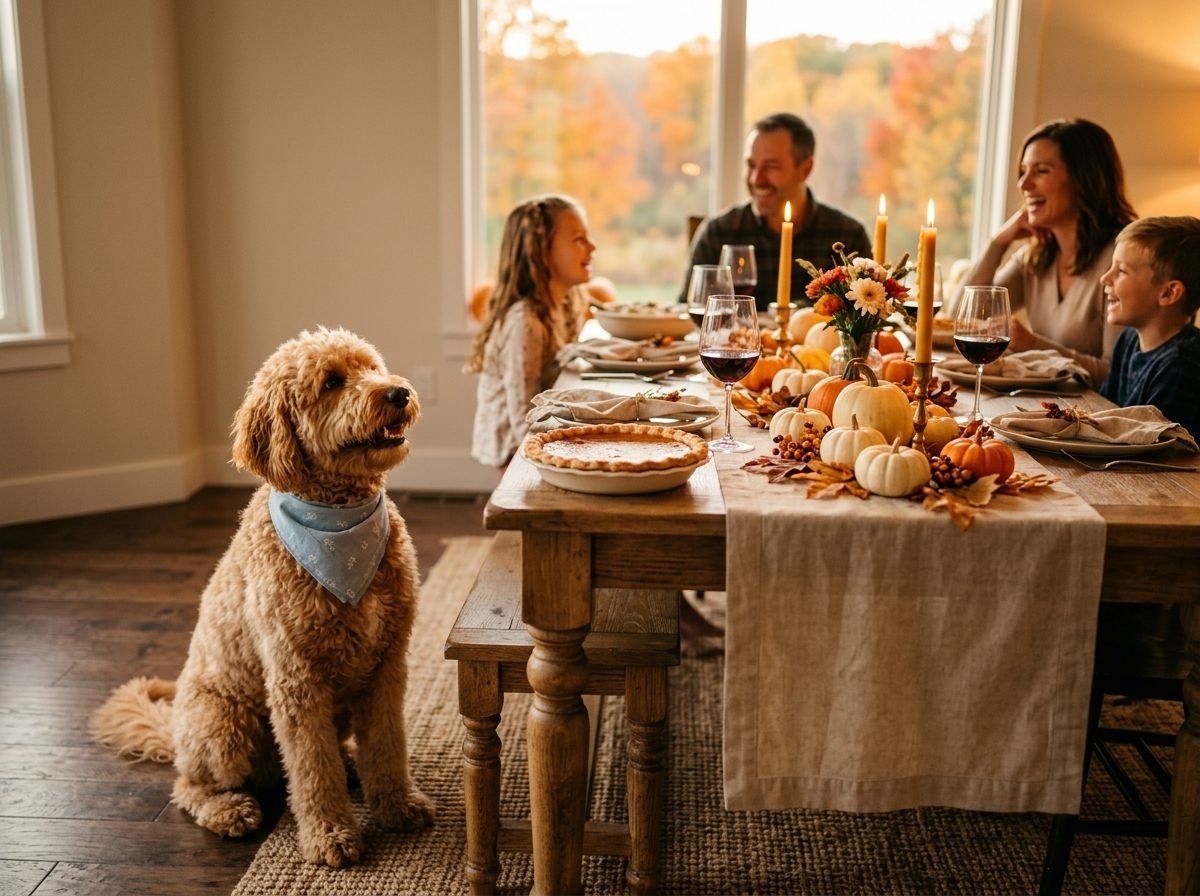
The turkey comes out of the oven, the whole house smells amazing, and suddenly there is a very good dog sitting politely at your feet. So, can dogs eat turkey? Yes, plain turkey is a lean, tasty protein that most dogs love. The catch is that the turkey on your holiday table is rarely plain. Skin, bones, gravy and seasoning are where the trouble starts.
Here is how to share safely, how much to give, and an easy way to give your dog their own Thanksgiving plate.
Quick answer: Yes. Dogs can eat plain, cooked, boneless and skinless turkey breast in small amounts. Skip the skin, bones, gravy, stuffing and anything seasoned with onion, garlic or lots of salt. Keep table scraps to a few small pieces, and call your vet if your dog gets into the carcass or a fatty plate.
Is turkey good for dogs?
Plain turkey is a great fit for a dog's bowl. It is one of the most common proteins in quality dog food for good reason:
- Lean, high-quality protein. Skinless white meat is packed with protein to support strong muscles, without a lot of fat.
- Easy on most tummies. Many dogs do well on turkey, which is why it shows up so often in gentle, limited-ingredient recipes.
- B vitamins and minerals. Turkey brings niacin, vitamin B6, selenium, zinc and phosphorus along with all that flavour.
- Picky eaters love it. A few shreds of plain turkey can get a fussy dog excited about dinner again.
The key word in all of this is plain. The roast bird at your holiday dinner usually comes with butter, herbs, salt and crispy skin, and that changes the picture.
What parts of the turkey are unsafe for dogs?
Turkey skin
Turkey skin is where most of the fat and seasoning lives. Rich, fatty foods can upset your dog's stomach, and in some dogs a big fatty meal can trigger pancreatitis, a painful condition that needs a vet. It is the piece your dog wants most and the one to skip.
Turkey bones
Never give cooked turkey bones. Cooking makes bones brittle, so they can splinter and cause choking, mouth injuries or blockages. That includes the wishbone, the drumstick and the carcass. Wrap leftovers and bones tightly and take the trash out, because a determined dog will find them.
Gravy, stuffing and seasoning
Gravy is mostly fat and salt. Stuffing is often loaded with onion, garlic, leeks or chives, which are toxic to dogs in any form, cooked or raw. Butter, heavy herb rubs and brines also add more fat and sodium than your dog needs.
Deli turkey and turkey bacon
Processed turkey slices, turkey bacon and turkey sausages tend to be high in salt and may contain onion or garlic powder. A tiny piece now and then is not a disaster, but they are not a great everyday treat.
Can dogs eat turkey on Thanksgiving?
Yes, with a plan. The safest way to include your dog is to set aside a few pieces of plain white meat before you season, baste or carve at the table. Pull them off, let them cool, and save them for your dog's bowl.
Holidays also come with a lot of hands sneaking scraps under the table. Let guests know your dog has their own treats so the gravy-soaked bites stay on the human plates. For more holiday ideas, our guide to dog-friendly holiday foods covers the sides that are safe to share, and why plain pumpkin deserves a spot in the bowl too.
A busy dinner is a good time to practise a "place" or "leave it" cue. Keep a pocket of tiny rewards handy so your dog earns something tasty for staying out of the kitchen. We use Mini Training Treats for this because they are about one calorie each, so you can reward often without spoiling dinner.
How much turkey can I give my dog?
Think of turkey as a treat or a topper, not a whole meal. A widely used rule of thumb is to keep treats and extras to about 10% of your dog's daily calories. In real life that looks like:
- Small dogs (under 20 lbs): a few thumbnail-sized pieces
- Medium dogs (20 to 50 lbs): a small handful, about 1 to 2 tablespoons of shredded meat
- Large dogs (50 lbs and up): up to a few tablespoons
If your dog is new to turkey, start with less and see how their stomach handles it. Dogs with a sensitive stomach, a history of pancreatitis or a special diet should check with their vet before any holiday extras.
What if my dog ate turkey skin, bones or gravy?
Stay calm and look at what and how much they ate. A small piece of skin may cause nothing more than a bit of gas. Call your vet or an emergency clinic right away if your dog ate cooked bones, a large amount of fatty food, or stuffing with onion or garlic, or if you notice vomiting, a swollen or painful belly, straining, or a dog who seems unusually tired. Do not try to make your dog vomit at home unless your vet tells you to.
For the everyday tummy wobbles that come with new foods and busy weeks, a lot of our dog parents keep Turkey Gut Booster on hand. It is a soft chew made with real turkey and a prebiotic blend for digestive support, and it doubles as a topper. Crumble one over dinner and watch it disappear.
Is raw turkey safe for dogs?
Raw turkey from the grocery store is not meant for dogs. It can carry bacteria like salmonella, which is a risk for your dog and for everyone handling it in your kitchen. If you like the idea of raw nutrition, choose a complete food made for dogs with safety steps built in, rather than a raw roast off the counter.
That is exactly why we make our turkey recipes freeze-dried. Our Turkey Meal Bites are freeze-dried raw turkey with organs and bone, plus pre and postbiotics for gut support. No cooking, no fridge, and no guessing whether the seasoning is safe.
Recipe: your dog's own Thanksgiving plate
Give your dog a festive bowl that is all of the fun and none of the risk. It takes five minutes.
You'll need:
- A small scoop of Healthybud Turkey Meal Bites (or 1 Turkey Meal Patty)
- 2 tbsp warm water
- 1 tbsp plain cooked turkey breast, shredded (no skin, no seasoning)
- 1 tbsp plain pumpkin purée or plain mashed sweet potato
- A few plain green beans, chopped
Steps:
- Add the warm water to the Meal Bites and let them sit for a minute to soften. You can also serve them dry for a crunchier bowl.
- Top with the shredded turkey.
- Add a spoonful of pumpkin or sweet potato and the chopped green beans.
- Serve it while you sit down to your own dinner, so everyone eats at the same time.
Our Meal Bites make this easy because they are a full freeze-dried raw meal on their own. The extras are just the holiday garnish. Scoop, serve and enjoy the happiest dog at the party.
The bottom line
Plain turkey is a safe and tasty treat for most dogs. Keep it boneless, skinless and unseasoned, keep portions small, and keep the carcass and the gravy boat out of reach. Want to give your dog turkey without the guesswork? Sprinkle our Turkey Meal Bites over their regular food as an easy, freeze-dried raw topper, or crumble on our best-selling Turkey Gut Booster, a soft turkey chew with prebiotics that supports a happy stomach. Either way, your dog gets their own turkey dinner, every day. Happy Thanksgiving from all of us at Healthybud.
FAQs
Can dogs eat turkey skin?
It is best to skip it. Turkey skin is high in fat and usually seasoned, which can upset your dog's stomach and, in some dogs, lead to pancreatitis. Stick to plain white meat.
Can dogs eat cooked turkey bones?
No. Cooked bones are brittle and can splinter, which can cause choking or internal injuries. If your dog swallows a cooked bone, call your vet for advice.
Can dogs eat dark meat turkey?
A little plain dark meat is fine for most dogs, but it is higher in fat than white meat. Skinless breast meat is the leaner choice, especially for small dogs or sensitive stomachs.
Can puppies eat turkey?
A few small pieces of plain, cooked turkey are generally fine for puppies. Their tummies are sensitive and they need a complete puppy diet, so keep extras tiny and ask your vet if you are unsure.
 Can Dogs Eat Pumpkin? Benefits, How Much & an Easy Topper
 Spring Hazards: Safety Tips For Your Dog
 Fall Superfoods for Dogs: What to Add to Their Bowl This Season